-
Quiet

(47 second read)
In a hectic world, where everything is telling you it is more important than anything else, quiet is a great gift.
BLUF
Quiet is good for the soul.
Reflection
There are two quiet times in the year, possibly three; Thanksgiving morning, New Year’s morning, and sometimes Christmas Day evening. My Favorite is Thanksgiving morning. Hardly anyone is on their way to work; there is very little background road noise, and cooking probably has yet to start. Take the time to be quiet, and luxuriate in it.
When the crush became too much for Jesus, he would withdraw to be by himself. After the Feeding of the 5000 in St. John’s Gospel, he writes, “Perceiving then that they were about to come and take him by force to make him king, Jesus withdrew again to the mountain by himself,” apparently his regular practice.
Not everyone is blessed with a quiet Thanksgiving morning. Those who keep the gas stations open and a bunch of restaurants. Nice is free; over-tipping is appreciated. Be nice to those people.
-
Prayer: The Good, The Bad, The Ugly

(50-second read)
Some of our prayers are good, some are bad, and some are downright ugly.
BLUF
Prayer fixes prayer.
Digging in
- Determining the quality of our prayers is a fruitless task. Even the most self-aware person is subject to self-deception.
- St. Paul assures us that we do not know how to pray appropriately (Romans 8:26)
- an excellent place to start is, “Lord, I do not know how to pray as I ought, but here’s what I’ve got…”
- Sadly, we can go wrong even with the Lord’s Prayer; we have unlimited creativity regarding self-interest and self-deception.
- Improving our prayer life is the work of the Holy Spirit. St. Paul also tells us that when we pray, the Holy Spirit “intercedes for us with groanings too deep for words.
- The more we pray, even poorly, the more the Holy Spirit intercedes for us. The more the Holy Spirit intercedes for us, the more our prayers align with our Father’s hopes.
Leave a comment
-
Did You Mean to Say…?

(75-second read)
My long-suffering wife has advised me not to use the phrases “bullshit” and “pain in the ass” when writing theologically.
BLUF
The unified editorial direction of the Bible is to trust Our Father.
Digging In
- I don’t doubt the New Testament authors got some of Jesus’ actual quotes, but certainly not all (not enough paper), and some of the words attributed to Jesus are likely to be as best as they remembered them.
- It doesn’t matter; we have what we have.
- Our faith is not based on the trust we place in the words in the Bible, but on the trust, we put in the Father, Son, and Holy Spirit.
- The Bible points us to that trust.
- All NT authors had ideas and backgrounds that shaped their writings. Still, we can be sure they all moved in a single editorial direction which St. John captured when he wrote, “Now Jesus did many other signs in the presence of the disciples, which are not written in this book; but these are written so that you may believe that Jesus is the Christ, the Son of God, and that by believing you may have life in his name.”
- But as to the coarseness of language, euphemisms are all over the Bible, and when writing things down, “polite company” tends to use these euphemisms rather than straight talk jargon.
- I am considering changing “bullshit” to “post-processed bovine feedstock” and “pain in the ass” to “I become uncomfortable when seated.”
Leave a comment
-
It’s Nothing Personal, It’s Just Business

(49 second read)
It’s Nothing Personal, It’s Just Business
One of the most repeated lines in The Godfather is, “It’s nothing personal; it’s just business.” And then someone gets their brains blown out. The business of The Church is to love our enemies – it’s nothing personal; it’s just business.
BLUF
Loving our enemies is what makes us part of the beloved Bride of Christ.
Digging In
- It is colossally annoying that we are supposed to love our enemies.
- It is equally irritating that we are also supposed to love those who annoy us (for those who think they have no enemies).
- Scripture never says, “Love our enemies except for those who <insert favorite heinous sin>, because <insert some dubious reason>.
- Jesus says, “A new commandment I give to you, that you love one another: just as I have loved you, you also are to love one another.” It is a non-optional commandment to love others unto our deaths.
- It is the power of the Holy Spirit that gives us strength in the time of need (when we would rather suggest our enemies do something anatomically impossible)
- Welcome to the Family Business
Leave a comment
-
What is Sin?

(45 second read)
The typical (and incorrect) understanding of sin is smokin’ seegars, dinkin’ brown liquor, and dancin’ with fancy women.
BLUF
Sin is trusting that we are god and should be treated as such.
Digging In
- The above definition of sin also is a good definition of being an a***ole.
- The problem begins in the Garden of Eden, where Adam and Eve do the ONE THING they were told not to do.
- In short, they thought they knew better than God.
- They thought they could be a better god than God.
- This is Original Sin.
- It also describes the human condition.
- Being law abiding doesn’t fix the problem; it only makes us think we don’t HAVE a problem.
The Solution
The only solution to the problem comes from loving God more than ourselves. And loving God means trusting that He will take what we do and make something good.
Leave a comment
-
Forgiveness == Trust (Faith)
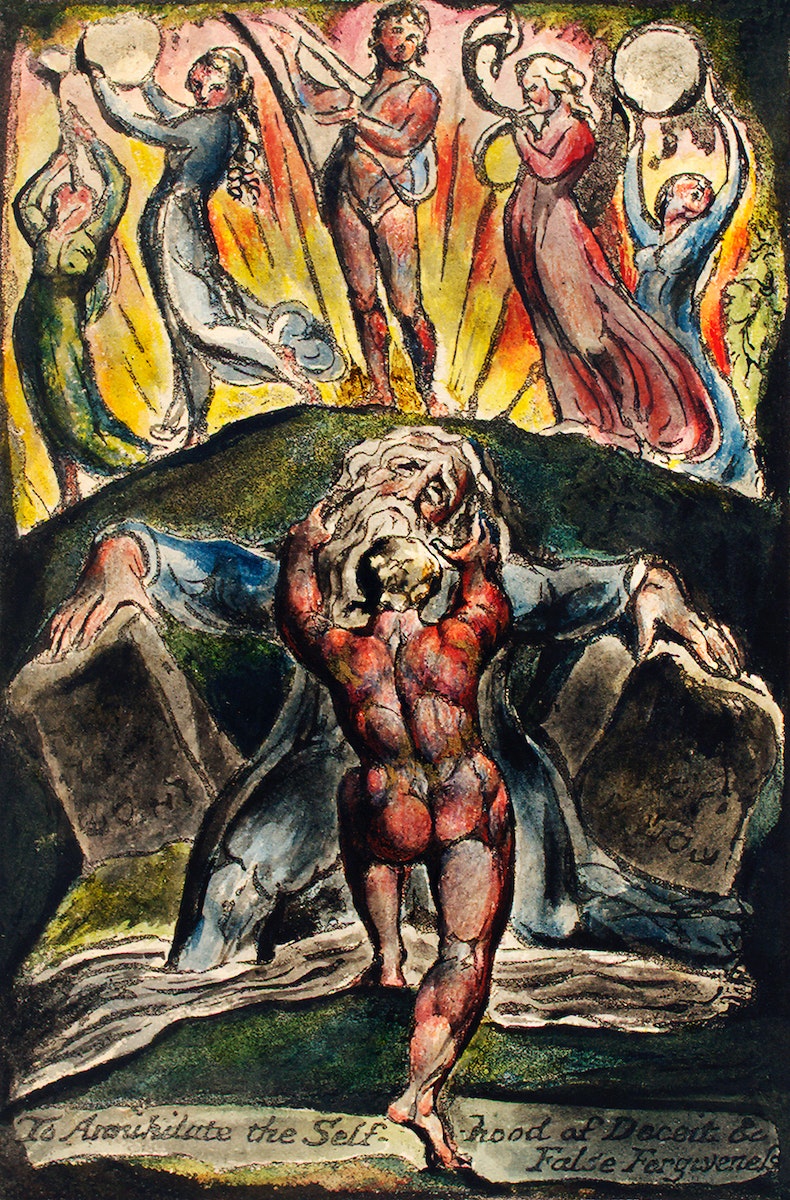
Forgiveness is as much at the center of Christianity as faith (trust).
BLUF
Without forgiveness, there is no trust. Without trust, there is no Christianity.
Digging in
It is inarguable that faith (trust) in Jesus Christ as Savior is at the center of Christianity. Trust and forgiveness are tightly bound; they might as well be two sides of the same coin. Not only are we forgiven, but we make the audacious claim to forgive others in the Lord’s Prayer.
To forgive someone means to trust them; this seems obvious. When Our Father forgives us, He trusts us not to sin again, even if that trust is misplaced (Our Father has hopes, too, you know?). When we fail to forgive others, we fail to trust Our Father; it denies our faith. The question to ask is, "Do we trust Our Father to do good out of the bad someone else has done?" (see Genesis 50)
Leave a comment
-
Faith is… What?

The word faith in our culture has become a word often used, but little understood, so little understood the word has become meaningless.
BLUF
Whenever you see the word faith in an English translation of the Bible, substitute the word trust.
Digging in
Most people seem to equate faith with belief. Belief is intellectual ascent and requires nothing of the believer. “You believe that God is one; you do well. Even the demons believe—and shudder!” James 2:19 St James also tells us, “that faith apart from works is useless? (2:20)
Imagine a conversation with someone who is afraid to fly…
me: Statistics show that flying is safer than driving
fear-of-flying: I believe that
me: Then how about hoping on that plane to Boston?
fear-of-flying: Not gonna' happen
Faith is acting on what you believe. Said another way, Faith trusts what it believes and acts.
Leave a comment
-
Narcissistic Christianity

Narcissistic Christianity should be an oxymoron, but sadly it exists when followers of Jesus follow out of self-interest.
BLUF
We follow Christ because of who he is, not because of what we want.
WTF?
Gustavo Gutierrez, in his excellent little book, On Job raised the interesting question, "Do you love God because of all the good He can do for you? Or do you love God because He’s God?" An alternative question is, "Not loving God is stoopid [sic]." If that’s the case, you might be a Narcissistic Christian, which is to say you are only in it for yourself and you have missed the whole point.
Thought Experiment Ask yourself the question, "Would I be willing to go to hell if it meant someone else could go to heaven?" I don’t think that’s possible, but it’s a telling thought experiment.
St Paul sez…
"For I could wish that I myself were accursed and cut off from Christ for the sake of my brothers, my kinsmen according to the flesh" Romans 9:3.
Leave a comment
-
Your Preaching is All Wrong

(46 second read)
Most of us clergy were taught to preach 3 point sermons, it is standard practice and traditional, but go ahead and ask your spouse at dinner what the sermon was about.
BLUF
there is no such thing as a bad short sermonZoom In
We tend to attribute short attention spans to the internet age with it’s easy access to all the information all the time. In real life we have always had short attention spans, it helps us avoid a lion sneaking up on us.
- one point is about the limit of what people can absorb in one sitting
- preaching isn’t about…
- how smart you are…
- entertaining the congregation
- training the congregation to have longer attention spans
- preaching is about…
- conveying essential truths about the faith
- encouraging Christian ethics
- if the congregation
- remembers one thing, it was a good sermon.
- changes at all, it was a great sermon
Leave a comment
-
Subscribe
Subscribed
Already have a WordPress.com account? Log in now.
 🙏️🩲️ Belief Briefs
Leave a comment